Sacred Art and Theatine Identity: “Theatine Mission in the Caucasus”
Cargando.. por favor espere...

In continuity with its spiritual, cultural, and artistic tradition, the Order of Clerics Regular Theatines reaffirms its commitment to sacred art as a privileged means of contemplation, transmission of memory, and expression of faith. Within this context stands the pictorial cycle carried out at the General Curia by Master Rodolfo Papa, the fruit of a relationship of deep collaboration and mutual esteem linking the artist to the life and mission of the Order.
A renowned painter, art historian, and academic, Master Papa has developed in these works a visual reflection that engages both the classical figurative tradition and Theatine identity. His painting belongs to the great current of sacred art, where the image transcends aesthetics to become an instrument of spiritual formation, historical memory, and theological contemplation. This bond between the Order and the artist embodies the living continuity of the relationship between Church and beauty, understood as a manifestation of truth.
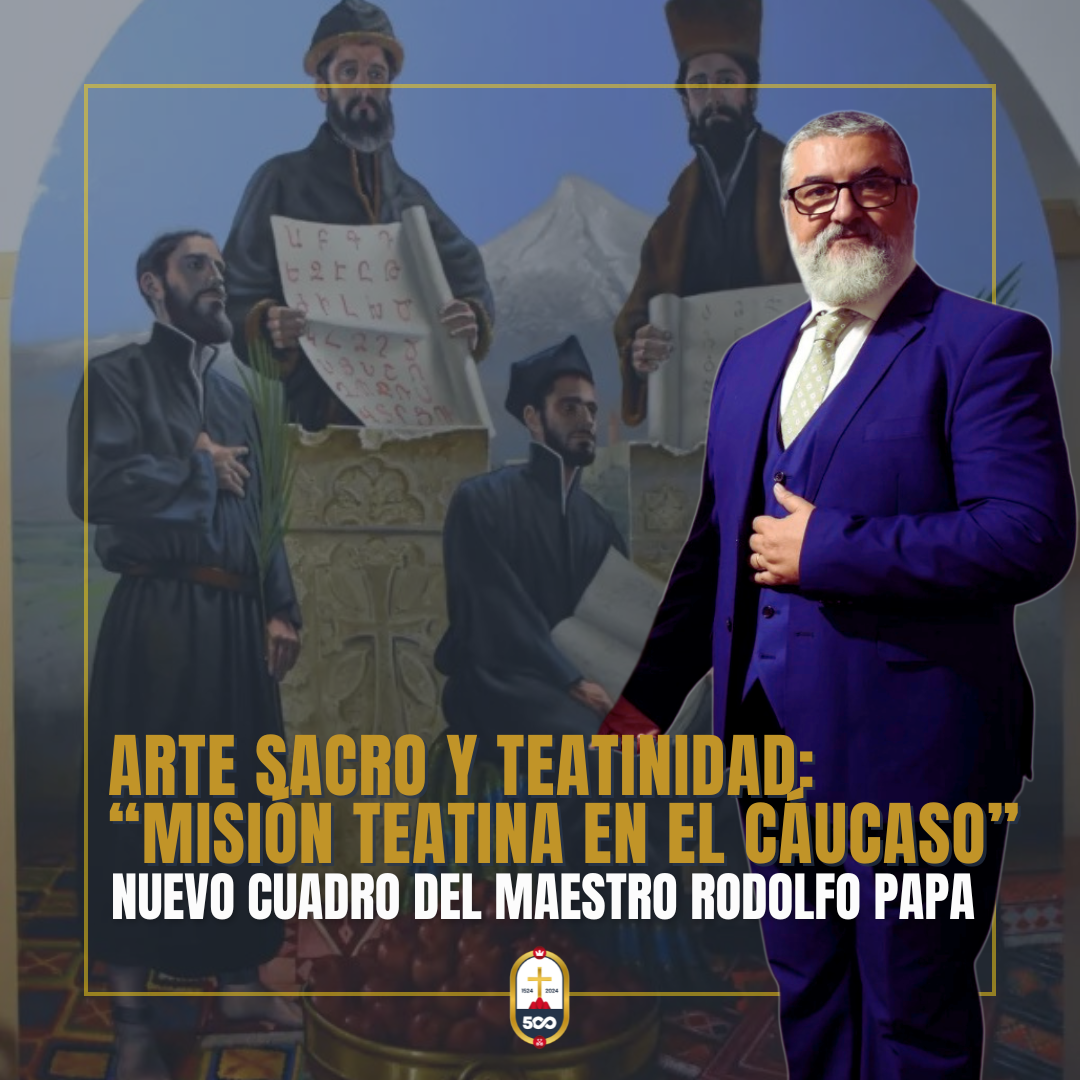
Among the most significant works of the cycle is the monumental canvas dedicated to the Theatine mission in the Caucasus during the seventeenth century. The painting evokes a little-known episode: in 1626 the Theatines sent their first religious to the region, and two years later missionaries had reached Gori in Georgia, an ancient Christian land situated between the Safavid and Ottoman Empires. Among them stood Father Cristoforo Castelli — missionary, physician, and painter — who traveled extensively, founded hospitals, and left testimonies of exceptional historical value. Alongside him served Fathers Arcangelo Lamberti, Andrea Borromeo, and Giovanni Avitabile.
The mission was not aimed at converting pagans but at visiting and supporting Christian communities whose faith predated Western tradition. This orientation shapes Papa’s interpretation, in which he boldly represents the spiritual specificity of the undertaking. Figures identifiable by their religious identity are placed within a landscape evocative of Caucasian geography, marked by rugged horizons and diffused light almost devoid of shadow.
The monumental scale recalls the great Baroque painting of the Counter-Reformation, in dialogue with the Roman tradition of Domenichino and Giovanni Lanfranco, while also echoing the plastic energy associated with Gregorio Sciltian. Yet the work transcends stylistic continuity: it proposes renewed awareness of the role of art in contemporary faith.
The aesthetic experience it generates goes beyond the visible: beauty illuminates the viewer and leads toward the central symbol of Christian faith — the Tree of Life evoked in Armenian khachkar tradition — wounded by sin and redeemed in the Passion and Death of Jesus Christ, pointing toward the hope of Resurrection.
The significance of Master Papa’s work has also been recently acknowledged by the universal Church through his commission to paint the preparatory portrait of Pope Leo XIV, serving as the basis for the official mosaic in the historical series of Supreme Pontiffs. This recognition highlights the artist’s international standing and underscores the value of the pictorial cycle in the Theatine General Curia.
Thus, the collaboration between the Order and Master Rodolfo Papa demonstrates how art remains a meeting place of history, faith, and beauty, capable of preserving memory, forming conscience, and leading hearts toward the mystery of God.
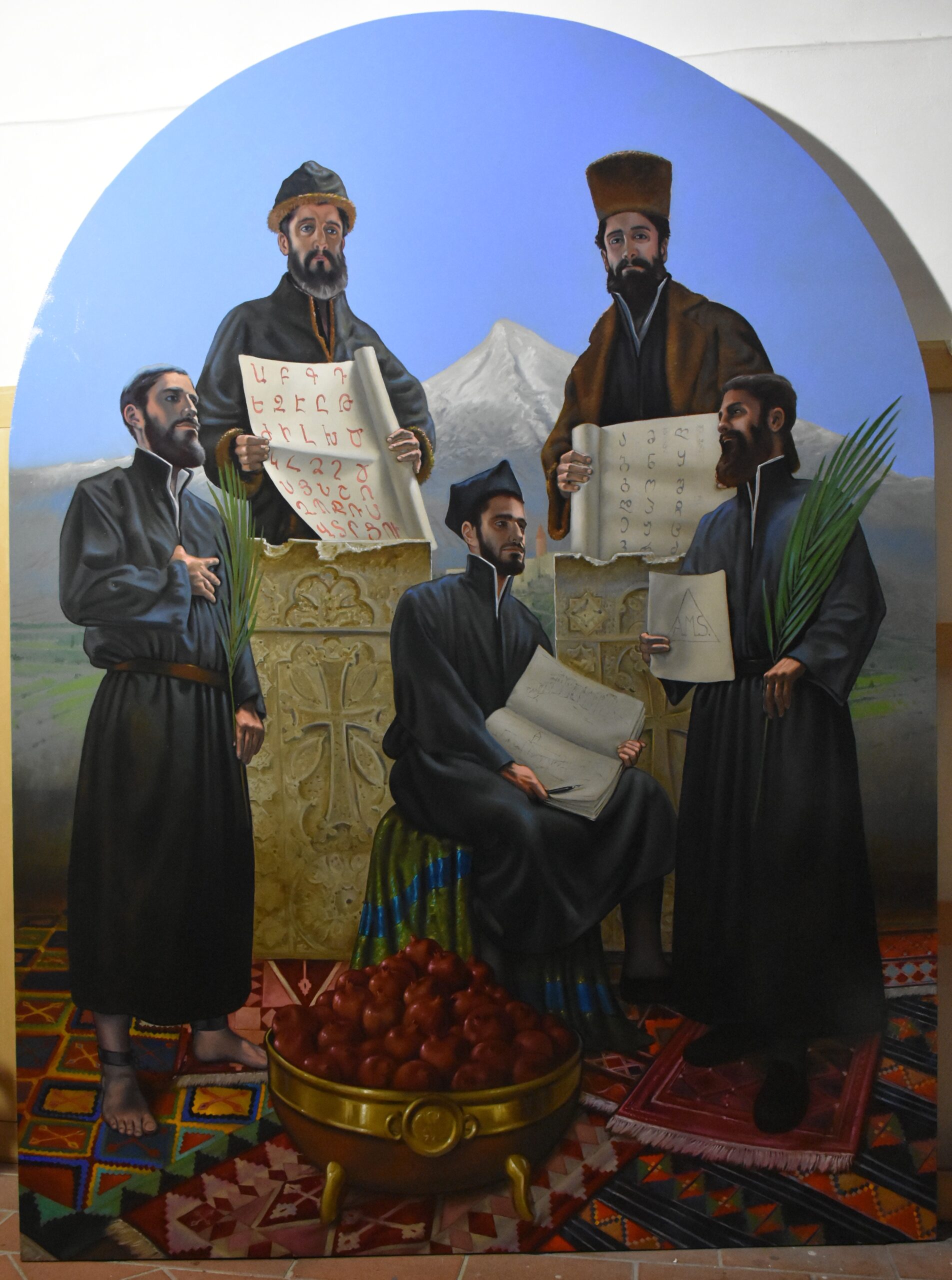 Photo: All rights reserved: www.rodolfopapa.it
